Heritage Roofing in Edinburgh
A practical guide to conservation roofing on Edinburgh's listed buildings and tenements, covering slate, leadwork, planning rules and sympathetic restoration.
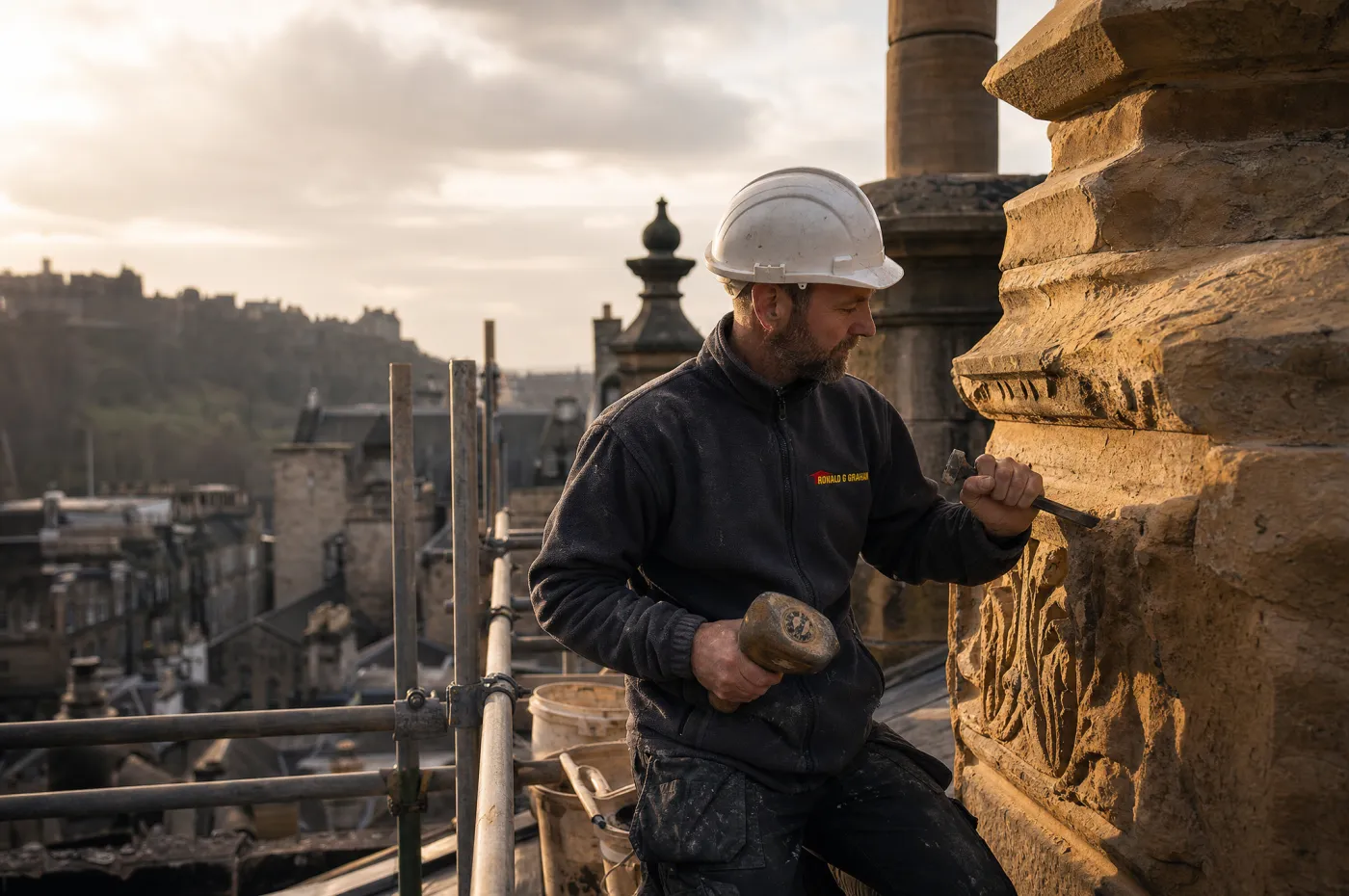
Heritage roofing in Edinburgh is the craft of repairing and restoring roofs on listed buildings, conservation-area tenements and period properties using traditional materials such as natural slate and lead, matched to the original so the work stays watertight and sympathetic to the building. Because much of central Edinburgh sits within the Old and New Towns UNESCO World Heritage Site, this work is often governed by listed building consent and conservation rules, not just ordinary roofing standards.
From the medieval closes of the Old Town to the Georgian terraces of the New Town, the city’s roofs are a working part of its history. This guide covers what heritage roofing actually involves, the materials and rules that apply in Edinburgh, and how to choose a contractor who will treat your building with the care it deserves.
What counts as a heritage roof
A heritage roof is any roof on a building of historic or architectural significance. In Edinburgh that includes a great deal more than the famous landmarks. Listed buildings, properties within conservation areas, and the tenements that make up so much of the city all fall under the same broad umbrella.
The Old and New Towns together form a UNESCO World Heritage Site, which means work on roofs there often has to meet strict standards. Even where a building isn’t individually listed, conservation area rules can affect what materials and methods you’re allowed to use.
Why it matters in Edinburgh
Heritage roofing isn’t only about appearances. It protects the things that give the city its character and keeps historic buildings watertight and structurally sound for the next generation.
- Architectural integrity. Stone tenements, churches and townhouses were designed as a whole. A roof finished in the wrong material or to the wrong detail breaks that unity.
- Cultural continuity. The city’s roofscape is part of what draws visitors and sustains its identity. Sympathetic repair keeps that intact.
- Regulatory compliance. Within conservation areas and on listed buildings, repairs frequently have to match the original materials and methods, so the work has to be planned with that in mind from the start.
- Long-term value. A roof restored properly, in the right materials, lasts decades and protects the value of the property beneath it.
Materials and techniques
Heritage work calls for traditional materials and the skills to use them. The common ones in Edinburgh are:
- Natural slate. Scottish and Welsh slate has been the standard pitched-roof covering across the city for centuries. Scotch slate was traditionally laid in diminishing courses, with larger slates at the eaves and smaller ones towards the ridge. Matching the size, colour and coursing of the existing slate is what keeps a repair invisible. A correctly laid natural slate roof typically lasts 80 to 100 years or more.
- Leadwork. Lead is used for flashings, valleys, box gutters, dormer cheeks and roof coverings on bays and porches. It is durable and entirely in keeping with older buildings, but it has to be sized to the right code and laid in correct bay lengths to allow for thermal movement, or it will fatigue and split. See our leadwork page for how this is detailed.
- Stone detailing. Skews, copes, chimney stacks and cope stones are part of the roof line on Edinburgh’s stone tenements, and conservation repairs often involve stonework alongside the slating.
- Clay tiles. Used on certain roofs and for detailing around features such as chimneys and skylights.
- Copper and zinc. Found on some roofs and decorative elements, and occasionally specified for new conservation work where a long-lived metal covering is wanted. Our copper and zinc roofing page covers where these suit a heritage setting.
The principle behind all of it is the same: match the original, respect how the building was put together, and avoid modern shortcuts that look wrong or cause damage over time. You can read more about how we approach this on our roofing and slating page, and our companion guide on how long a slate roof lasts in Scotland covers longevity in detail.
How to choose a heritage roofing contractor
Not every roofer is set up for conservation work. When you’re comparing firms, look at:
- Experience with historic buildings. Ask specifically about listed buildings and tenements, not just roofing in general.
- Traditional skills. Slating, leadwork and stone detailing are distinct trades. Make sure the team actually has them.
- A relevant portfolio. Ask to see completed conservation projects, ideally similar to yours.
- A sound conservation approach. A good contractor prioritises authenticity and will explain how they’ll match existing materials and details.
- Local knowledge. Edinburgh has its own conservation rules and consent processes. Choose someone who has dealt with the council and worked within World Heritage constraints before.
- Clear, written quotes. Costs for labour, materials and any access or scaffolding should be itemised, not vague.
- Aftercare. Reputable firms stand behind their work and will sort out anything that arises afterwards.
Where we work
We carry out heritage and conservation roofing across Edinburgh, including the Old Town, New Town, Leith, Stockbridge, Bruntsfield, Morningside, Marchmont, Dean Village and the surrounding neighbourhoods, as well as across the Lothians. You can see an example in our case study on a Georgian New Town roof brought back in natural slate.
If you own a listed building or a period property and need slate, leadwork or a full restoration handled sympathetically, get in touch for an assessment. You can also see the full range of work on our services page or read our companion guide on natural slate versus tile.

Frequently asked questions
Do I need listed building consent to repair a heritage roof in Edinburgh?
If the building is listed, like-for-like repairs in the original materials are often allowed, but anything that changes the appearance, material or detailing usually needs listed building consent from the City of Edinburgh Council. Conservation area rules can also apply even when a building is not individually listed. A good contractor will help you establish what consent is required before work starts.
Can I re-roof a tenement in modern slate-effect tiles?
In most conservation areas and on listed buildings the answer is no. Repairs are normally expected to match the original natural slate in size, colour and coursing. Synthetic or fibre-cement substitutes are sometimes permitted on less sensitive buildings, but they do not match the longevity or appearance of natural slate and are best avoided on period roofs.
How long does a heritage slate roof last?
A natural slate roof laid correctly with sound leadwork typically lasts 80 to 100 years or more. Lead flashings and valleys may need attention sooner, often around the 50 to 60 year mark, depending on the code of lead used and how well it was detailed.
Who is responsible for the roof in a shared tenement?
In most Edinburgh tenements the roof is common property, and repair costs are shared between the flat owners, usually in line with the title deeds or the Tenements (Scotland) Act. Where owners cannot agree, the council can sometimes serve a statutory notice. It is worth getting a clear survey and quote so the costs can be shared fairly.