How long does a slate roof last in Scotland?
How long a natural slate roof lasts in Scotland, what affects its lifespan, the warning signs of failure and how to make yours last.
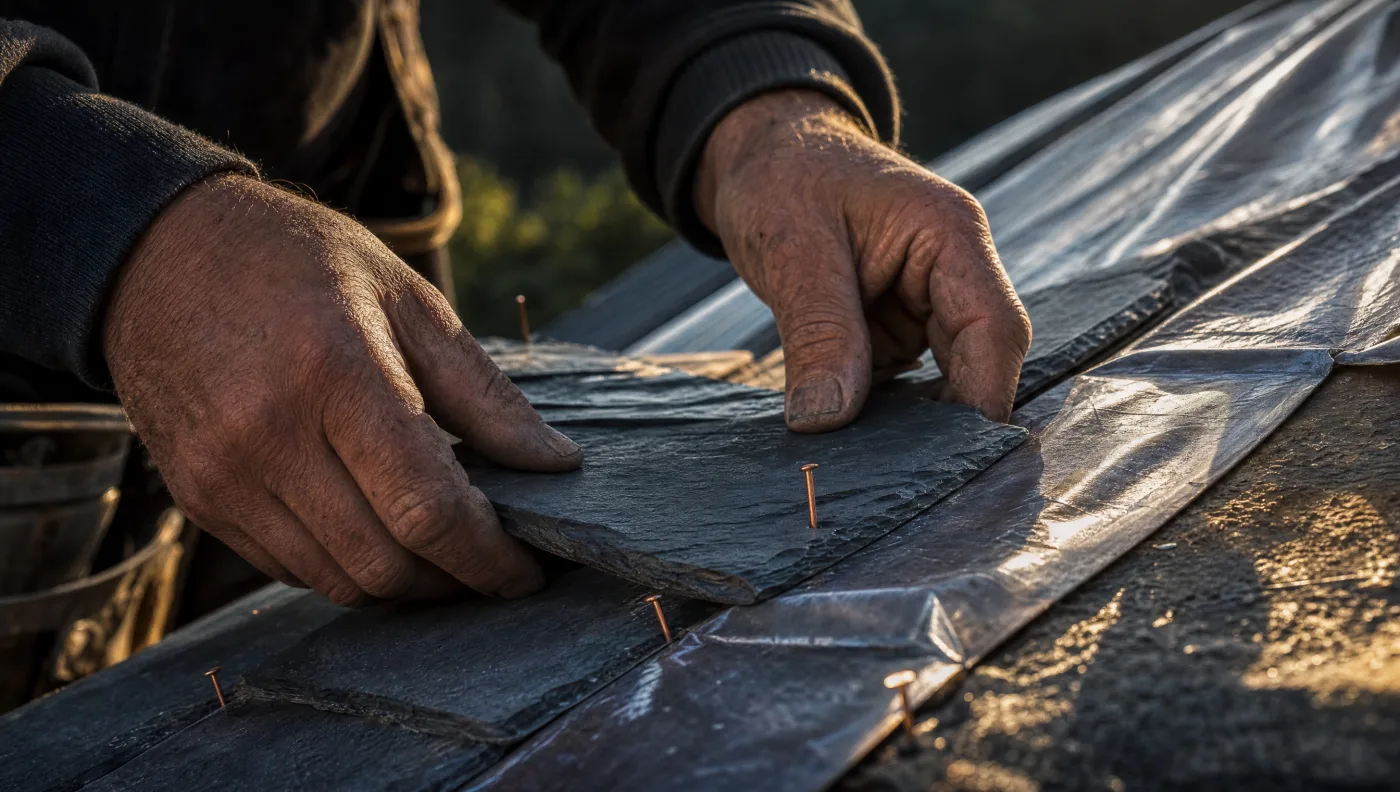
The short answer: a well-laid natural slate roof in Scotland typically lasts 80–150 years, and often longer. The slate itself can outlive the building — it’s usually the fixings, lead flashings and timbers that wear out first, which is why maintenance matters more than the slate’s age alone.
Slate has covered Scottish roofs for centuries, and for good reason: it’s beautiful, fireproof and astonishingly durable in our wet, windy climate. But “how long will it last?” doesn’t have a single answer — it depends on the type of slate, how well it was laid, and how it’s looked after. Here’s what actually determines the lifespan of a slate roof in Scotland.
Slate types & their lifespan
Not all slate is equal. The material on your roof makes a big difference to how long it will last:
- Natural Scottish slate (80–150+ years). Traditional Ballachulish and West Highland slate is exceptionally hard-wearing. Much of it is no longer quarried, so it’s prized and usually salvaged and re-laid.
- Welsh & Spanish natural slate (75–125 years). High-quality natural slate that weathers beautifully and is the common choice for re-roofs today.
- Fibre-cement & synthetic slate (20–40 years). Cheaper and lighter, but nowhere near the lifespan of natural slate — and rarely suitable for conservation areas.
What affects how long it lasts
Two identical slate roofs can have very different lifespans. The main factors are:
- The fixings (“nail sickness”). Old iron nails corrode long before the slate does. When they fail, slates slip — even though the slate itself is fine. This is the single most common reason a Scottish slate roof needs attention.
- Lead flashings & valleys. Lead around chimneys and in valleys typically needs renewing every 40–60 years — often sooner than the slate.
- Exposure & weather. Coastal salt (think Portobello), driving rain and freeze-thaw cycles all accelerate wear.
- Ventilation & the timbers beneath. Poor ventilation rots sarking and battens from below, shortening the life of the whole roof.
- Quality of the original work. A properly laid roof with the right headlap and detailing simply lasts longer.
The slate is rarely the problem. Nine times out of ten it’s the nails, the lead or the timber that’s reached the end of its life — not the slate itself.
Warning signs your roof is failing
Catch these early and you’ll often save a full re-roof. Look out for:
- Slipped, cracked or missing slates — especially after a storm
- Slates that sound dull or “flake” when tapped (delamination)
- Damp patches, staining or peeling paint on top-floor ceilings
- Pieces of slate or mortar in the gutters or on the ground
- Daylight visible through the roof in the loft
- Sagging lines in the roof slope
Spotted any of these? Don’t wait for the next storm. A quick survey now is far cheaper than water damage later — book a free roof check or call 0800 234 3243.
How to make your slate roof last longer
A natural slate roof rewards a little care. The most cost-effective things you can do:
- Have it inspected every few years — and always after a major storm.
- Keep gutters and valleys clear so water drains freely and doesn’t back up under the slates.
- Replace slipped slates promptly before water reaches the timbers.
- Renew lead flashings on time rather than waiting for them to leak.
- Fix ventilation issues to protect the sarking and battens beneath.
Repair, re-slate or replace?
If the slate is sound but fixings are failing, a re-slate (re-laying the existing or salvaged slate with new fixings, membrane and lead) gives you a near-new roof at a fraction of replacement cost. If the slate itself is delaminating across the roof, a full re-roof is the better long-term value. A good roofer will tell you honestly which one you need — and in a conservation area, will keep the appearance authentic either way.
If you’re weighing this up for an Edinburgh property, our Edinburgh roofing guide covers slate, tenement and conservation work in detail — or see how we handled a New Town heritage re-slate.
Key takeaways
- Natural slate in Scotland lasts 80–150+ years; synthetic slate far less.
- Fixings, lead and timbers usually fail before the slate does.
- Slipped slates, ceiling damp and gutter debris are the early warning signs.
- Regular inspection and prompt repairs dramatically extend a roof’s life.
- A re-slate often beats a full replacement for value — get an honest survey.

Frequently asked questions
How long does a slate roof last in Scotland?
A natural slate roof in Scotland typically lasts 80–150 years or more. Scottish slate is among the most durable; Welsh and Spanish natural slate also perform very well. Synthetic or fibre-cement slate lasts far less — usually 20–40 years.
Is it the slate or the fixings that wear out first?
Almost always the fixings. Old iron nails corrode and fail ("nail sickness") long before the slate degrades, which causes slates to slip even though they're still sound. Lead flashings and roof timbers also tend to need attention before the slate itself.
What are the signs a slate roof needs replacing?
Watch for slipped, cracked or missing slates, damp patches on top-floor ceilings, slate or mortar debris in gutters, daylight visible in the loft, and sagging in the roof line. If problems are widespread rather than isolated, it may be time for a re-slate or re-roof.
Can an old slate roof be repaired rather than fully replaced?
Often, yes. If the slate is sound but the fixings are failing, a re-slate — re-laying the existing or salvaged slate with new nails, membrane and lead — restores the roof at a fraction of full replacement cost. A free survey will tell you which option makes sense.
How often should a slate roof be inspected?
Every few years as a rule, and always after a major storm. Regular inspections catch slipped slates and failing lead early, before water reaches the timbers and turns a small repair into a big one.