Asbestos roof repair & removal in Edinburgh, done properly
Asbestos roofing work is the safe, controlled removal of asbestos cement roof sheets, found on many older commercial, industrial and garage roofs, followed by disposal at a licensed facility and a re-roof in modern profiled sheet.
Reviewed by Ronald Graham, Fellow of the Institute of Roofing (FIoR) · Last updated July 2026
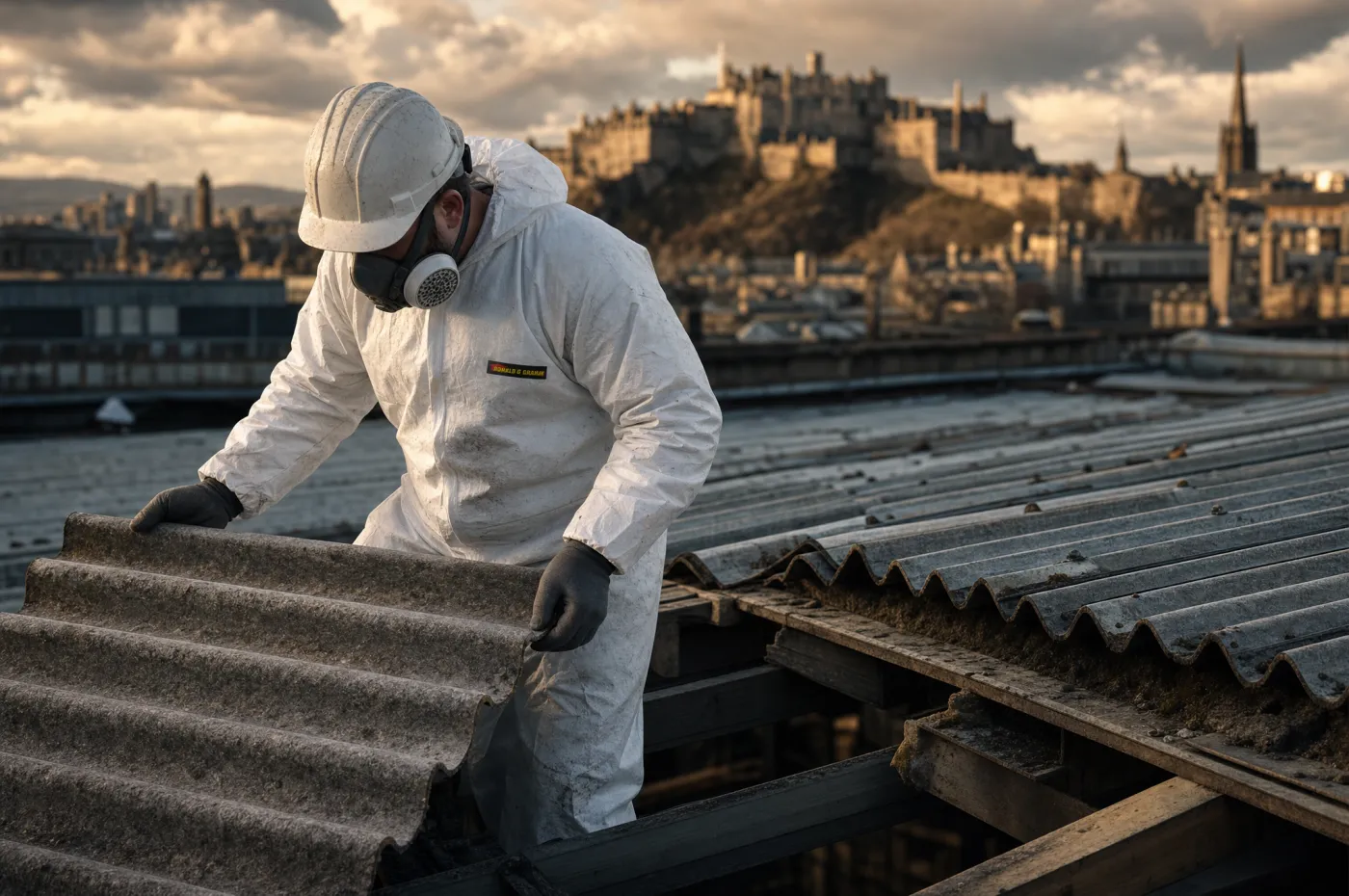
Recognising an asbestos cement roof
If your building dates from roughly the 1950s to the mid-1980s and the roof is grey, corrugated or profiled cement sheeting, it almost certainly contains asbestos. It was the standard low-cost roof for garages, sheds, farm buildings, warehouses, factory units and commercial outbuildings for decades. The same material often appears in cement gutters, downpipes, soffits and flue pipes. Until a sample has been tested, the safe assumption is that grey cement roof sheets of that age are asbestos and should be treated accordingly.
Intact and undisturbed, asbestos cement is low risk, because the fibres are locked into the cement. The problem is age: decades of weathering make the sheets brittle, and a single storm, a fallen branch or a well-meaning attempt to clean or drill them can release harmful fibres. That is why removal and any repair belong with people equipped to handle it under proper controls, not a ladder and an angle grinder.
How we remove and dispose of it safely
Asbestos cement is lower-risk, non-licensed work under the Control of Asbestos Regulations 2012, but it still has to be done properly. We work under the correct controls: trained operatives, suppression to stop fibres becoming airborne, sheets removed whole rather than broken on the roof, and the work notified where the regulations require it. The old material is double-wrapped, removed as hazardous waste and disposed of at a licensed facility, with the consignment documented so you have a clean, compliant paper trail for your records, a future sale or your duties as a duty-holder.
What's included
- Survey and assessment of suspected asbestos cement roofs
- Controlled removal of asbestos cement roof and wall sheets
- Removal of asbestos cement gutters, downpipes and flashings
- Double-wrapping and documented disposal at a licensed facility
- Re-roof in modern profiled metal or fibre-cement sheet
- Single-ply or liquid-applied flat roof replacement where suited
- Insulation, rooflight and cladding upgrades at the same time
- Programme planned around your operations to minimise disruption
Replacing with a modern roof
Stripping the asbestos is only half the job; what you put back matters more. In most cases we re-cover in a modern profiled metal or fibre-cement sheet that echoes the old profile but lasts far longer and insulates far better, and we will upgrade the rooflights and insulation while the roof is open. Where the building suits it, a commercial flat roof system, single-ply or liquid-applied, may be the better answer. We cover Edinburgh, the Lothians, Fife and across Scotland, and take on asbestos and re-roofing contracts UK-wide. Read our guide on preparing a commercial roof for winter, or book a free survey and we will tell you what you are dealing with.
From the survey to the finished roof, everything was on time, tidy and exactly what we were quoted. You can tell it's a proper family firm that cares about the work.
Get a free survey for your roof
No obligation, no pushy sales — just an honest look and a clear written quote.
Book a free survey 0800 234 3243Common questions
Where is asbestos found on a roof?
Most often in asbestos cement, the grey, slightly fibrous corrugated or profiled sheeting used on roofs and walls from roughly the 1950s to the mid-1980s. You will see it on older garages, sheds, farm buildings, warehouses, factory units and commercial outbuildings. It can also turn up in cement gutters and downpipes, soffits, flue pipes and some bitumen-based roof felts and flashings. If your building is that age and the roof sheets look like grey corrugated cement, treat them as asbestos until tested.
Is an asbestos cement roof dangerous?
Left undisturbed and in good condition, an asbestos cement roof is low risk, because the fibres are bound into the cement. The danger comes from disturbing it: cutting, drilling, breaking or weathering the sheets releases fibres that are harmful if inhaled. That is exactly why removal and any repair must be carried out under controlled conditions by people who know how to handle it, rather than by climbing up with a grinder. A weathered, cracked or storm-damaged asbestos roof should be assessed promptly.
Do you need a licence to remove asbestos roofing?
Asbestos cement is classed as lower-risk, non-licensed work under the Control of Asbestos Regulations 2012, but it still has to be done safely: notified where required, with the right controls, trained operatives, suppression to stop fibres becoming airborne, and proper waste handling. Higher-risk asbestos materials are licensed work. We carry out asbestos cement roof removal under the correct controls and arrange safe, documented disposal at a licensed facility.
What happens to the old asbestos sheets?
They are removed whole wherever possible, never broken up on the roof, double-wrapped and disposed of as hazardous waste at a licensed facility, with the consignment documented. You get a clean, compliant paper trail showing the material was removed and disposed of correctly, which matters for your records, for a future sale and for any landlord or duty-holder responsibilities under the regulations.
What do you replace an asbestos roof with?
Usually a modern profiled metal or fibre-cement sheet that mimics the old profile but with far better life, insulation and weather performance, or a single-ply or liquid-applied flat roof system where the building suits it. We can also upgrade insulation and rooflights at the same time, and add cladding to the walls if they were asbestos too. The replacement is specified to the building's use, span and budget.
Can you re-roof while we keep operating?
Usually yes. For commercial and industrial premises we plan the programme around your operations, phasing the strip and re-cover so the building stays watertight and as much of it stays in use as possible. We agree access, working hours and any shutdown windows up front, so removal and re-roofing cause the least possible disruption to your business.
Explore further.
Need this done properly?
A free, no-obligation survey and a fixed written quote from Edinburgh's award-winning family roofers.