Edinburgh tenement roof repairs: who pays & statutory notices
Who's responsible for an Edinburgh tenement's shared roof, how the cost is split between owners, what a statutory notice means, and how to organise a repair.
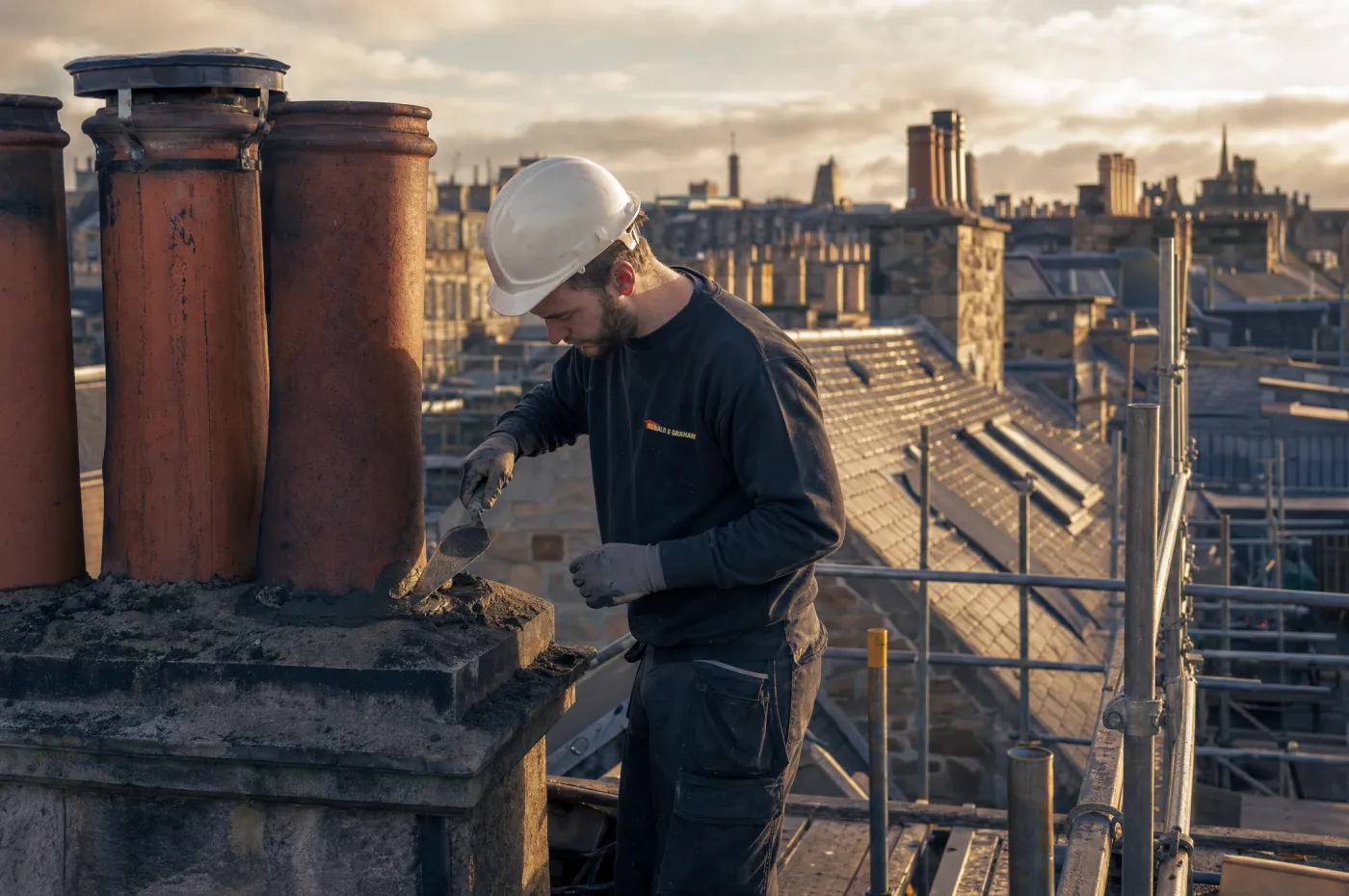
If you own a flat in an Edinburgh tenement and the roof needs work, the first question is almost always the same: who pays, and how do we even get this organised? The short answer is that the roof is usually shared, the cost is split between the owners, and there’s a clear legal framework for reaching a decision — even when not everyone agrees. Here’s how it actually works, in plain English.
The roof is (almost always) shared
In a typical Edinburgh tenement, the roof over the building is common property — it belongs to, and is the responsibility of, all the flat owners, not just whoever lives on the top floor. That surprises people, but it’s the foundation of everything else: a leak coming into the top-floor flat is, legally, usually a shared problem with a shared bill.
Your title deeds are the first place to look. They may set out exactly how roof repairs are shared (for example, equally between flats, or in proportion to floor area). Many Edinburgh deeds are old, vague or silent on the point — and that’s where the law steps in.
What the Tenements (Scotland) Act 2004 says
Where the deeds don’t give a clear answer, the Tenements (Scotland) Act 2004 and its built-in Tenement Management Scheme fill the gap. In practice it does two important things:
- Decisions — owners can agree “scheme decisions” (like carrying out a roof repair) by a majority, so a single reluctant neighbour can’t block a necessary repair indefinitely.
- Cost-sharing — it sets a default for how the cost is divided. For most repairs that’s equal shares between the flats, though some costs are shared by floor area. Each owner is liable for their share once a repair is properly agreed.
The Act also lets any owner instruct emergency work to stop the building deteriorating (for instance, making a storm-damaged roof watertight) and recover the others’ shares afterwards — useful when water is coming in and you can’t wait for a full owners’ meeting.
Statutory and dangerous-building notices
Many Edinburgh owners have heard the phrase “statutory notice” and worry about it. Here’s the reality today:
A statutory or dangerous-building notice is a formal instruction from the City of Edinburgh Council to carry out repairs — and it’s generally used where a building (or part of it, like a chimney or a section of roof or stonework) has become dangerous or unsafe. The council can require the work, and in some cases arrange it and recover the cost from owners. The large, proactive statutory-repair programmes of the past have been scaled back, so most ordinary shared roof repairs are now organised by the owners themselves, not under a notice.
If you do receive a notice, don’t panic — but don’t ignore it either. Get a roofer who knows this work to survey the roof, tell you what’s genuinely needed, and quote it properly. Acting promptly is almost always cheaper than letting the council arrange the work for you.
How a shared repair actually gets done
The process is more manageable than it sounds, and it’s the same whether or not a notice is involved:
- Get a survey and an itemised quote. A proper survey of the whole roof — not just the leaking corner — so everyone’s paying for the right works. (See our roof surveys & reports.)
- Circulate it to the owners. A clear, itemised quote — ideally with each owner’s share broken out — makes agreement far easier.
- Reach a decision. Under the deeds or the Tenement Management Scheme, usually a majority of owners.
- Appoint a contractor and agree access. Scaffold, timings and who’s the point of contact.
- Carry out the work and split the cost. Each owner pays their share; a good contractor invoices clearly so there are no arguments.
If your building is factored, the factor will often run this process — but owners can usually still propose their own contractor and get competing quotes.
How Ronald G Graham helps with shared roofs
Shared tenement roofs are core to what we do across Edinburgh — from Marchmont and Bruntsfield to Leith, Newington and the New Town. We:
- Survey the whole roof and tell you honestly what’s needed — repair or re-roof.
- Quote the shared cost clearly, broken down per owner where it helps you get agreement.
- Coordinate the job between owners and factors, including access and scaffold.
- Handle statutory-notice and shared-repair works as a matter of routine, and respond fast on our 24/7 line when a shared roof springs a leak.
If you’ve got a tenement roof problem — a notice through the door, a recurring leak, or owners who can’t agree where to start — book a free survey or call 0800 234 3243. We’ll give you a clear picture and a clear price you can take to your neighbours.
This guide is general information, not legal advice. For a definitive view on your building’s title deeds or a specific notice, speak to a solicitor.

Frequently asked questions
Who pays for the roof in an Edinburgh tenement?
Almost always all the owners, not just the top-floor flat. A tenement roof is normally common property, so the cost of repairing it is shared — by the split set out in your title deeds, or, if the deeds are silent, by the Tenement Management Scheme in the Tenements (Scotland) Act 2004 (commonly equal shares, or by floor area in some buildings).
What is a statutory notice for roof repairs?
It's a formal instruction from the City of Edinburgh Council to carry out repairs. Today the council mainly serves notices where a building is dangerous or unsafe (a dangerous-building notice), and can step in on emergency works. Most routine shared roof repairs, though, are organised by the owners themselves rather than under a notice.
What if one owner won't pay for the shared roof?
Under the Tenement Management Scheme a repair can be agreed by a majority of owners, and each owner is then liable for their share — a non-paying owner can ultimately be pursued for the debt, which can attach to their flat. We provide a clear, itemised quote you can circulate so everyone sees exactly what they're being asked to pay for.
Do I need to use the factor's contractor?
Not necessarily. If your building is factored, the factor will often organise repairs, but owners can usually propose their own contractor and get competing quotes. We're happy to quote alongside a factor and work to their process.
How do you quote for a shared tenement roof?
We survey the whole roof, give you a single itemised quote for the works, and — where it helps — break down each owner's share so it's easy to circulate and agree. Then we coordinate access and carry out the work once owners have signed off.