Natural Slate vs Tile: Which Roof Is Right for Your Home?
How natural slate compares with concrete and clay tile on looks, lifespan, cost and weight, and which suits Edinburgh homes best.
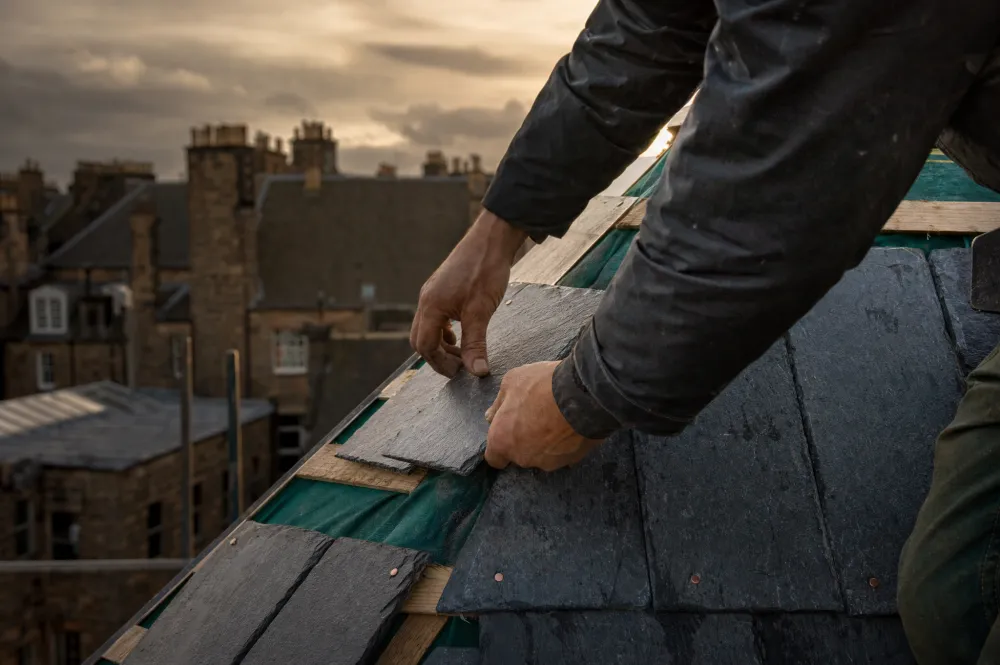
Natural slate lasts longer and suits period and conservation-area homes, while concrete or clay tile is cheaper, lighter on choice of colour and often the more practical option for newer properties or roofs that cannot easily carry the weight of slate. For most Edinburgh homes the decision comes down to the age and style of the building, what the roof structure can support, and the budget. The two can look similar from the street but behave quite differently once you get into lifespan, weight and cost.
At a glance
| Factor | Natural slate | Concrete / clay tile |
|---|---|---|
| Typical lifespan | 80 to 100+ years | 40 to 60 years |
| Weight | Heavy | Heavy (concrete), lighter (clay) |
| Upfront cost | Higher | Lower |
| Choice of colour and shape | Limited, natural greys | Wide range |
| Conservation areas | Usually required | Rarely permitted |
| Best suited to | Period and traditional homes | Newer homes, varied styles |
Natural slate
Natural slate is formed underground over millions of years, as fine-grained rock is split into thin, flat pieces. It’s long been regarded as one of the best roofing materials available, and it’s the traditional covering across much of Edinburgh.
Strengths
- Lifespan. Installed correctly, a natural slate roof commonly lasts 80 to 100 years, and often considerably longer. Our guide on how long a slate roof lasts in Scotland goes into this in detail.
- Durability. It stands up well to rain, wind and the freeze-thaw cycles of a Scottish winter. It won’t rot and isn’t troubled by pests.
- Thermal performance. The density of slate helps hold heat in, which can reduce energy loss.
- Fire resistance. Slate offers good natural fire protection.
- Appearance. Most commonly seen in shades of grey, with subtle natural variation that suits period and traditional homes.
Things to weigh
- Weight. Slate is heavy, so the roof structure has to be able to carry it. On a re-roof this sometimes means strengthening the timbers first.
- Layered detailing. Slate can be laid in textured, layered courses for effect, though this slightly raises the chance of individual slates cracking.
- Imitation alternatives. Synthetic “slate” products exist, but materials such as plastic don’t match the properties or longevity of the real thing.
Concrete and clay tiles
Roofing tiles come mainly in concrete and clay, in a far wider range of shapes and colours than natural slate. With good-quality tiles and professional installation, durability can be comparable.
Strengths
- Choice. A much broader range of designs and colours to suit different styles of home.
- Weatherproofing. Concrete tiles in particular are robust and cope well with severe weather.
- Detailing. Clay tiles are useful around finer features such as chimneys and skylights, and where the structure can’t take the weight of concrete.
- Cost. Tiles are generally cheaper than slate, especially once you factor in any structural work slate would need.
Things to weigh
- Weight. Concrete tiles are heavy in their own right, so structural support still matters.
- Maintenance. Tiles can be more prone to algae and moss, though this depends on the local climate and the finish chosen.
Which is right for an Edinburgh home?
There’s no single answer. It depends on the building, the budget and what’s already there.
- For period and traditional properties, particularly in conservation areas, natural slate is usually the right choice and is sometimes required to match the existing roof and meet local rules.
- For newer homes or where you want a wider choice of colour and a lower upfront cost, good-quality tile is a sensible option.
- Structure is the deciding factor in many cases. If the roof can’t easily carry slate, tile may be the more practical route unless you’re prepared for strengthening work.
If you’re restoring a historic roof, our guide to heritage roofing in Edinburgh goes into the conservation side in more detail, and many period roofs also involve leadwork around valleys, chimneys and dormers.
Not sure which way to go?
The best way to decide is to have the roof looked at properly, taking the structure, the surroundings and your budget into account. We can talk you through the options for both slate and tile and give you a clear estimate.
See our roofing and slating work, browse the full range of services, or contact us for advice.

Frequently asked questions
Is slate or tile cheaper for a re-roof?
Tile is generally cheaper upfront, both in material cost and because it is often lighter, which can avoid the structural strengthening a slate roof sometimes needs. Over the full lifespan the gap narrows, since natural slate can last twice as long as concrete tile and may not need replacing as soon.
Can I put slate on a roof that currently has tiles?
Sometimes, but not always. Slate is heavy, so the roof timbers have to be able to carry the extra load. On a re-roof this can mean strengthening the structure first. A roofer should assess the existing structure before you commit to switching from tile to slate.
Do I have to use natural slate in an Edinburgh conservation area?
Often, yes. In conservation areas and on listed buildings, repairs and re-roofing usually have to match the existing natural slate, and slate-effect tiles are rarely accepted. Check with the City of Edinburgh Council, or speak to a contractor who handles conservation work.
How long does a tile roof last compared with slate?
A good concrete or clay tile roof typically lasts 40 to 60 years, while a correctly laid natural slate roof commonly reaches 80 to 100 years or more.