Single-Ply Flat Roofing Explained
What single-ply membrane roofing is, the benefits and trade-offs of systems like PVC, TPO and EPDM, and where it suits commercial and domestic buildings.
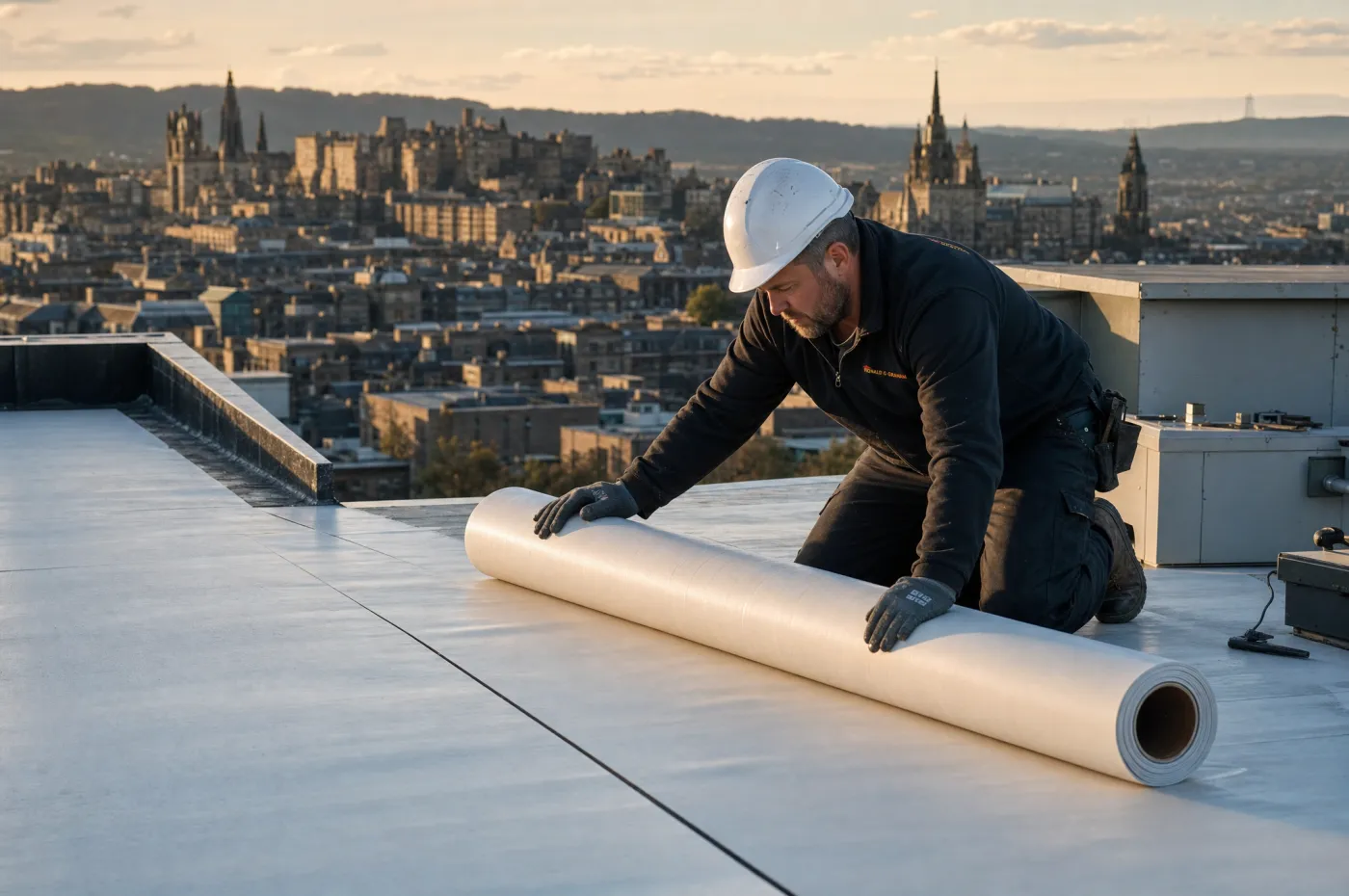
Single-ply flat roofing waterproofs a roof with a single layer of synthetic membrane, usually PVC, TPO or EPDM, fixed over the deck or insulation in one pass. It installs faster than multi-layer built-up systems, weighs less and copes well with the weather, which is why it has become one of the most widely used flat-roof systems on commercial and modern domestic buildings.
This guide covers what single-ply roofing actually is, the membranes available, the trade-offs to weigh up, and where it makes sense.
What is single-ply roofing?
Single-ply roofing uses one layer of synthetic membrane to waterproof a flat or low-pitched roof. That single layer is the headline feature. Traditional built-up systems rely on several layers to do the same job, so single-ply installs faster and tends to be more cost-effective on labour.
The membrane can be laid directly onto the roof deck or over a layer of insulation, which makes it a flexible choice across different build-ups. It is available in a few different materials, the most common being PVC, EPDM and TPO, with other options such as CSPE and neoprene also in use.
Single-ply membranes are flexible, resist moisture and UV well, and from established suppliers such as Bauder and IKO they carry long manufacturer guarantees and proven track records. Membranes are typically fixed in one of three ways: mechanically fastened to the deck, fully adhered with adhesive, or held down by ballast such as gravel or paving on flat commercial roofs.
The benefits
- Fast installation. A single layer goes down quicker than a multi-layer system, which keeps labour costs down and shortens disruption.
- Lightweight. It puts less load on the roof structure, which can matter on extensions and larger spans.
- Weather resistant. Single-ply stands up well to extreme weather, water and chemical exposure.
- Good UV reflection. Many membranes reflect sunlight effectively, which helps protect the building beneath and can ease summer heat gain.
- Choice of systems. Different membranes offer different levels of performance, so the system can be matched to the building and budget.
The trade-offs
Single-ply is not the right answer for every roof, and it is worth being clear-eyed about the limits.
- Because it is a single layer, the membrane is thinner than a built-up system and can be more vulnerable to punctures and mechanical damage. Careful detailing and protection of the surface matter.
- Standing water can be an issue on roofs with poor falls, so drainage needs to be designed properly.
- Quality varies between systems and installers. A cheap membrane fitted badly will not last.
Which membrane suits which job
The right membrane depends on the building, the expected lifespan, and the budget.
- EPDM is a robust, well-proven synthetic rubber membrane, often supplied in large single sheets that minimise seams. It is straightforward to install, copes well with movement and is often the most economical option, which makes it popular on garages, extensions and smaller domestic roofs. Expect a 20-year-plus service life when laid well.
- TPO is a hot-air welded thermoplastic that reflects UV well and offers a good balance of performance and cost. It suits a wide range of commercial and domestic applications and avoids the plasticisers used in PVC.
- PVC is typically the premium option. Its seams are hot-air welded into a continuous waterproof skin, which makes installation more skilled work, but a well-laid PVC roof offers a long service life and is a strong choice for larger commercial roofs and complex detailing.
A reputable installer will recommend the membrane based on your roof rather than defaulting to one product. We do not quote prices here because they depend on the size, access, build-up and chosen system, and a proper figure only comes from looking at the roof.
Where single-ply fits
Single-ply works across both commercial and domestic flat roofs. On the commercial side it is a natural fit for warehouses, retail units, schools and larger flat expanses where speed of installation and low weight count, which is why it features heavily in our commercial flat roofing work. On domestic flat roofs it is well suited to extensions, garages and dormers. For the wider case for a flat roof over a pitched alternative, see our guide to the benefits of a flat roof.
Get a recommendation
If you are weighing up a flat roof system, the most useful next step is a roof survey and report so we can recommend the right membrane for your building. Get in touch and we will take a look.

Frequently asked questions
What is the difference between EPDM, TPO and PVC?
EPDM is a synthetic rubber membrane, usually the most economical and forgiving to install. TPO and PVC are thermoplastics with hot-air welded seams: TPO balances cost and UV reflectivity, while PVC is the premium, longest-lasting option for larger and more complex roofs.
How long does a single-ply roof last?
A well-installed single-ply membrane from a reputable manufacturer typically lasts 20 to 30 years, with PVC at the upper end. Lifespan depends heavily on the quality of the membrane, the falls and drainage, and the standard of the seam welding and detailing.
Is single-ply suitable for a domestic extension?
Yes. EPDM and TPO are common, cost-effective choices for extensions, garages and dormers because they are light, quick to fit and need minimal maintenance.
Does single-ply need much maintenance?
It is low-maintenance but not no-maintenance. Keep outlets and gutters clear, check the seams and upstands annually, and protect the surface from sharp impacts, since a single layer is more vulnerable to punctures than a built-up system.