Does Building Insurance Cover Roof Repairs?
When building insurance pays out for roof repairs, how storm-damage claims work, what counts as wear and tear, and how a roofer's report supports your claim.
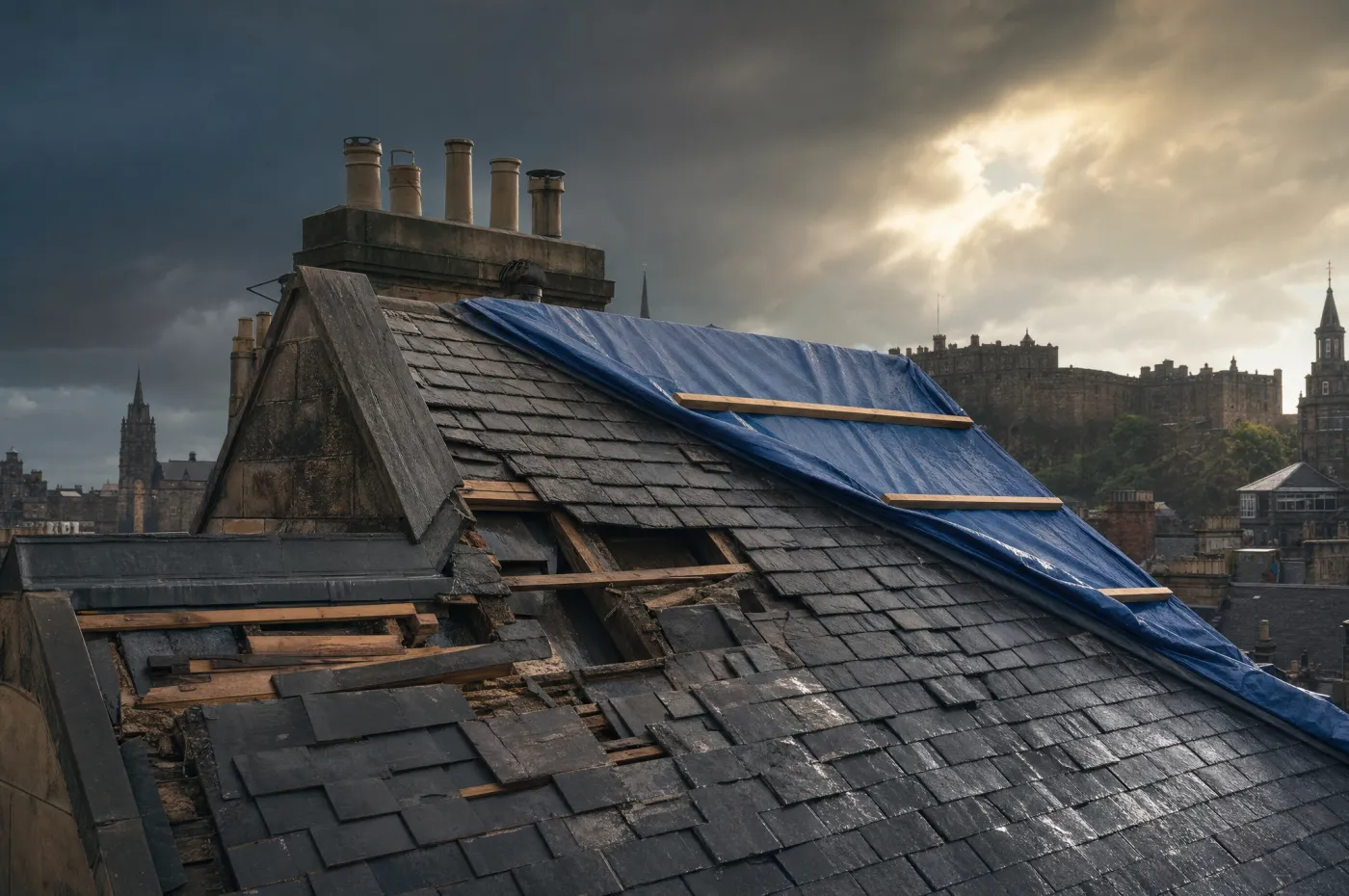
Building insurance usually covers roof repairs when the damage is caused by a sudden, insured event such as a storm, fallen tree, fire or vandalism, but not when it results from gradual wear and tear, poor maintenance or age. Whether you get a payout, and how much, comes down to the cause of the damage, the age of the roof and its condition beforehand.
Here is how roof insurance claims tend to work in the UK, what is usually covered, and how a roofer’s report can strengthen your case.
How much will insurance cover?
Occasionally a policy provides full coverage for a roof repair, but that is the exception rather than the rule. More often, an insurance policy covers part of the cost.
Full coverage is most likely when:
- The roof is new or in excellent condition.
- The specific cause of the damage is written into your policy, storm damage being the common example.
Will insurance pay for a whole new roof?
Whether an insurer covers a full replacement depends on the extent of the damage. To pay for a new roof, they will generally need it proven that a repair alone cannot fix the problem.
There is one other case worth knowing. If replacing the roof works out cheaper than repairing every individual damaged area, an insurer may cover the replacement on cost grounds.
What insurers look at
When an insurance company assesses a roofing claim, three factors carry most of the weight.
What caused the damage
This is the single biggest factor. Damage from ordinary wear and tear is not covered. Damage from a sudden, unexpected event often is. Typically insured causes include:
- Storm damage — high winds lifting slates or tiles, or driving rain forcing water in. UK insurers commonly treat gusts above roughly 55 mph as storm conditions.
- Falling trees or branches, often after a storm.
- Fire, lightning and explosion.
- Vandalism or malicious damage.
- Impact, such as a vehicle striking the building.
In Edinburgh, winter storms sweeping in off the Forth are the most common trigger for roof claims, particularly on exposed gable ends and chimney stacks.
What insurers will not cover is gradual deterioration: perished felt, slipped slates from aged nails, blocked gutters or general lack of maintenance. This varies policy to policy, so always check exactly what events your policy covers, ideally before you need to claim rather than after.
The age of the roof
Age affects how the damage is valued. An older roof in need of repair is generally treated as having a lower repair value than a newer one. As a rough guide, a roof under 10 years old is usually considered relatively new.
The roof’s condition before the damage
The better the condition beforehand, the more coverage you are likely to receive, because the value of what was damaged is higher. This is where an annual roof survey and report earns its keep. It serves two purposes:
- It helps keep the roof in good condition and prolongs its life.
- It provides documented, dated proof of the roof’s condition if you ever need to claim, which makes it far harder for an insurer to dismiss damage as pre-existing wear.
Spotting problems early also keeps small faults from being reclassified as neglect. Our guide on the signs your roof needs attention covers what to watch for between surveys.
You will need an estimate
When you file a claim, the insurer will ask for an estimate of the repair cost. That means getting a roofer to assess the damage and put a figure on the work.
Most reputable roofers provide an insurance estimate free of charge and are happy to talk through your claim and answer questions along the way.
How RGG helps with claims
We regularly provide insurance estimates and condition reports for roof repairs, including after storm damage. A clear, professional report describing the damage, its likely cause and the cost to put it right gives your insurer exactly what they need to assess the claim, and gives you the best chance of a fair outcome. If a leak has already started, our guide on what to do about a roof leak covers the immediate steps to limit the damage.
Get in touch
If you need an estimate or a survey to support a claim, get in touch and we will help.

Frequently asked questions
Does building insurance cover storm damage to a roof?
Yes, most buildings policies cover storm damage, such as slates or tiles lost in high winds or water forced in by driving rain. Insurers usually look for evidence of genuine storm conditions, so a dated report linking the damage to a specific event helps.
Will insurance pay for an old roof to be replaced?
Not usually on age alone. Insurers cover repairs to damage from an insured event, not the renewal of a worn-out roof. A full replacement may be funded only if the storm damage is so extensive that repair is not viable, or if replacing works out cheaper than repairing every damaged area.
Why might my roof claim be rejected?
The most common reasons are wear and tear, lack of maintenance and pre-existing defects. If the insurer believes the roof was already in poor condition, they can decline the claim, which is why documented survey evidence matters.
Do I need a roofer's report to claim?
Insurers will ask for an estimate of the repair cost, which means having a roofer assess the damage. A written condition or storm-damage report describing the cause and cost strengthens the claim considerably. Most reputable roofers provide insurance estimates free of charge.